
Ajaero Blasts Power Sector Reform, Says Nigerians Are “Paying for Darkness”
Featured, Latest Headlines, News, News Across Nigeria, News From The State Monday, February 16th, 2026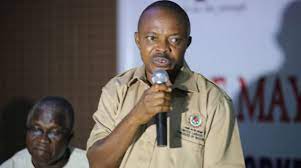
(AFRICAN EXAMINER) – Joe Ajaero, President of the Nigeria Labour Congress (NLC), has criticised Nigeria’s electricity privatisation, saying it has failed to improve supply and instead deepened energy poverty for workers, households and businesses.
Speaking at the annual women and youth conference of the National Union of Electricity Employees (NUEE) in Abuja, Ajaero called for a comprehensive review of the electricity sector, arguing that more than a decade after privatisation, Nigerians are still battling poor supply, repeated grid failures and rising tariffs.

According to him, electricity generation has remained largely stagnant at between 4,000 and 5,000 megawatts, roughly the same output recorded before the sector was privatized, which he described as clear evidence of systemic failure.
“Instead of progress, we witness regression. Instead of light, we have darkness,” Ajaero said, adding that the national grid now collapses with troubling frequency, sometimes plunging the entire country into blackout.
He described the privatisation exercise as a “grand deception,” alleging that public assets were handed to investors lacking both the technical expertise and financial strength required to manage them effectively.
Ajaero further claimed that many core investors relied heavily on loans from Nigerian banks to acquire distribution and generation companies, rather than bringing in fresh foreign capital. This, he argued, weakened domestic credit and contributed to pressure on the naira.
“They acquired the DISCOs and GENCOs on a shoestring budget and now expect Nigerian workers to repay their loans through outrageous electricity tariffs,” he said.
The labour leader also criticised the electricity band classification system, saying it places heavy financial burdens on consumers without guaranteeing stable power supply.
“Band A consumers pay through their noses but still receive epileptic power supply. Nigerians are being asked to pay for darkness,” he said, rejecting what he called a segregation of consumers. “Electricity is a right, not a commodity to be auctioned to the highest bidder while the poor remain in the dark.”
Ajaero also questioned reports that the Federal Government may pay between ₦2 trillion and ₦3 trillion to generation companies, describing the subsidy claims as unclear and warning that such payments could be politically motivated ahead of the 2027 elections.
While acknowledging the new electricity framework established by the Electricity Act, which devolves certain regulatory powers to states, he said decentralisation alone would not solve the sector’s problems without a clear national strategy.

He called for a national stakeholders’ summit involving workers, manufacturers and energy experts to develop a people-centred roadmap focused on affordable tariffs, stronger public investment in generation and transmission infrastructure, and reliable electricity supply.
“The Nigerian people cannot continue to pay for darkness,” Ajaero said.
Short URL: https://www.africanexaminer.com/?p=105742