
Oil Palm Traceability: Solidaridad Builds Capacity For 4 States Stakeholders
Featured, Latest Headlines, News Across Nigeria Saturday, May 31st, 2025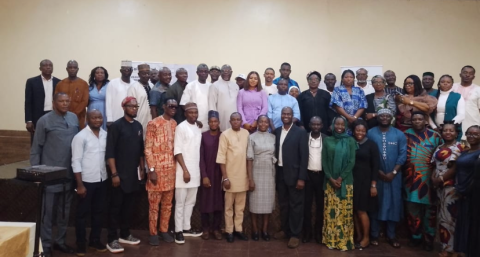
(AFRICAN EXAMINER) – International Civil Society group, Solidaridad, has built the capacity for stakeholders and government agencies from Akwa Ibom, Cross River, Enugu, and Kogi states for the development of an oil palm traceability system to enhance smallholders’ access to green financing and markets.
The organization is supporting a robust traceability system in Nigeria through the National Initiative for Sustainable and Climate-Smart Oil Palm Smallholders (NISCOPS), which the four states are participating in.

Solidaridad was founded in 1969, working to promote sustainable development and social justice in the global supply chain.
They focus on fair trade practices, producer support, and sustainable agricultural practices, particularly in areas like cocoa, coffee and palm oil.
Speaking during the workshop, Mr. Kene Onukwube, Programme Manager oil palm at Solidaridad, explained that “the two day capacity building workshop held in Enugu weekend is part of Solidaridad’s effort, towards “supporting the development traceability system.
The Participating agencies included the Standards Organisation of Nigeria (SON), the National Agency for Food and Drug Administration and Control (NAFDAC), the Nigeria Export Promotion Council (NEPC), the Oil Palm Growers Association of Nigeria (OPGAN), and food protection agencies from the respective states.
According to him, the initiative will foster multi-stakeholder and inter-ministerial collaboration in establishing a national traceability system to help smallholder farmers overcome market entry barriers.
He said the traceability framework will align with national sustainability standards, promote deforestation-free supply chains, and strengthen smallholder integration within the palm oil sector.
The programme Manager disclosed that NISCOPS in Nigeria is supported by the Kingdom of the Netherlands and the UK’s Foreign, Commonwealth & Development Office (FCDO).
The project contributes to improved land use, sustainable and climate-resilient oil palm landscapes, enhanced incomes for smallholder farmers, and the creation of inclusive markets for sustainably produced palm oil.
Our correspondent writes that Since 2019, when Solidaridad started the implementation of NISCOPS in Nigeria, the programme has piloted two smallholder-inclusive business models with private sector, highlighting the positive impact of market incentives such as stable offtake and pricing for farmers.
The establishment of a multi-stakeholder platform and oil palm desk offices, in partnership with the four state governments, to coordinate aid investors and smallholder farmers have also been key in strengthening green growth and sustainable development.
Onukwube, hinted that in Nigeria,14,000 farmers have been trained on sustainable farm practices and diversification methods, bringing 18,581 hectares of farmland under sustainable practices. \6,351 hectares of degraded land has been restored, technological upgrade of 8 artisanal mills facilitated an increase in oil extraction rate.
Also, the project has distributed 175,344 seedlings for replanting 1,227 hectares of land.
Short URL: https://www.africanexaminer.com/?p=102854